

Major Conference FMPS: Sudden death under the spotlight
Key panelists dissect causes and prospects
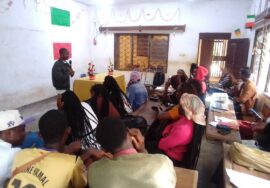
Dschang,UDs/SIC-21/05/26.Sudden death remains one of the most unsettling medical realities because it often occurs with little or no warning, leaving families, clinicians, and communities in shock. At the University of Dschang, this critical issue was brought into focus during a multidisciplinary conference (Major Conference) of the Faculty of Medicine and Pharmaceutical Sciences that united experts from various fields such as cardiology, neurology, psychology, law, and forensic medicine. The event was designed not only to explain sudden death, but also to identify its principal causes, highlight existing gaps in prevention, and point toward realistic prospects for reducing its burden.This Major Conference was moderated by the Dean of the Faculty of Medecine and Pharmeceutical Sciences, Pr CHOUKEM Siméon Pierre.
 The conference hosted at the Joseph FONDJO Auditorium made one message clear: sudden death should not be treated as an unavoidable mystery. In many cases, it is linked to identifiable risk factors, and in some situations, it can be prevented through awareness, screening, timely intervention, and stronger health systems. By approaching the subject from several professional angles, the panellists gave the audience a fuller understanding of a problem that is both medical and social.
Dr. NGONGANG Ouankou Christian, cardiologist, opened the discussion by emphasizing that sudden death is more common in African settings than many people realize. His presentation underlined the danger of underestimating the condition, even among individuals who appear healthy. He drew attention to several important risk factors, including hypertension, obesity, excessive alcohol consumption, illicit drug use, and sedentary lifestyles. His contribution carried an urgent preventive message: regular medical follow-up, early screening, and healthier living habits can reduce risk and save lives.
Prof. DZUDIE Tamdia Anastase expanded the discussion by examining sudden cardiac death in low-resource countries. He explained that the challenge is not limited to the disease itself, but extends to the weakness of emergency response systems, the scarcity of defibrillators, limited access to cardiopulmonary resuscitation, and the high cost of cardiac devices. His presentation showed that prevention depends not only on individual behaviour, but also on system-level investment in emergency care, training, and public preparedness. In his view, improving survival requires strengthening the chain of care before, during, and after cardiac arrest.
The neurological dimension of sudden death was addressed by Dr. FOGANG Fogoum Yannick, neurologist, who reminded participants that the heart is not the only organ that can be involved. He explained that some sudden deaths may originate from neurological conditions such as stroke, epilepsy, sleep apnea, and severe emotional shocks. His intervention broadened the audience’s perspective and highlighted the need to consider the brain and nervous system when investigating unexplained deaths. This was an important reminder that sudden death is a complex phenomenon that cannot be reduced to a single organ or specialty.
Prof. NJIFON Nsangou Hassan brought a deeply human perspective to the conference by focusing on the psychological impact of sudden death. He stressed that when death strikes unexpectedly, the family is often left in a state of shock, confusion, and emotional distress. His message was that psychological support is essential for helping the bereaved process grief and begin recovery. His mediation added an important emotional dimension to the conference, reminding the audience that sudden death does not only affect the body; it also leaves lasting wounds on those left behind.
The legal aspect of sudden death was addressed by M. TSAYEM Roger, Magistrate, who explained that justice becomes involved when a death is suspicious and requires investigation. He clarified that legal authorities intervene to determine responsibility, establish the truth, and ensure accountability where necessary. His contribution showed that sudden death may sometimes move beyond the medical sphere and enter the realm of legal inquiry, especially when the circumstances are unclear or contested.
Dr. KAMGA Tokam Abel Christian, forensic doctor, completed the panel by offering a medico-legal perspective. He explained that sudden death in adults is often natural and is most commonly associated with cardiovascular causes. He also pointed out that in infants, some sudden deaths may remain unexplained even after careful examination. His intervention was important because it demonstrated how forensic medicine helps distinguish between confirmed causes, possible causes, and cases that remain unresolved after autopsy. In this way, medico-legal expertise becomes essential in the accurate interpretation of sudden death.
What gave this conference its strength was not only the quality of the individual presentations, but also the coherence of the overall message. Each expert contributed a different angle, yet all of them converged on one central truth: sudden death is a serious public-health issue that demands prevention, education, and coordination. The discussions showed that early detection of risk factors, better emergency response, public awareness, and multidisciplinary collaboration are indispensable in reducing preventable deaths.
The event also stood out for its practical organization. Free certificates were issued to participants who registered, giving attendees formal recognition of their participation. This detail added value to the conference by encouraging student involvement and rewarding engagement. It transformed the event from a simple academic meeting into a documented learning experience with institutional significance.
Several take-home messages emerge clearly from this document. Sudden death is often associated with risk factors that can be identified in advance. Cardiovascular causes remain dominant, but neurological, psychological, legal, and forensic dimensions also matter. Prevention depends both on personal responsibility and on stronger health systems. Public awareness is essential because informed communities are more likely to seek screening, respond early to warning signs, and support emergency interventions. Finally, sudden death should never be viewed only as a medical endpoint; it is also a social and emotional event that affects families, institutions, and communities.
The University of Dschang conference on sudden death was a timely and highly relevant scientific event. By bringing together panelists from different disciplines, it provided a rich and balanced examination of the causes, consequences, and prevention of sudden death. The conference succeeded not only in educating its audience, but also in reinforcing the importance of vigilance, prevention, and interdisciplinary collaboration. Its strongest lesson is simple and urgent: while sudden death may arrive without warning, knowledge, preparedness, and timely action remain the most effective defenses./NLA