
UDs hosts the 4th African Pragmatics Conference
Highlights on language and social justice in Africa
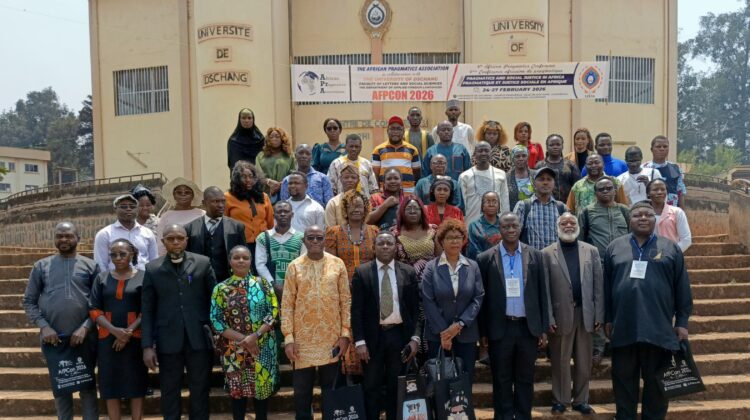
From the 25th to 27th February 2026, the African Pragmatics Association (APrA), in collaboration with the University of Dschang through the Department of Applied Foreign Languages, Faculty of Letters and Social Sciences, organized the 4th African Pragmatics Conference under the theme: << Pragmatics and Social Justice in Africa >>.
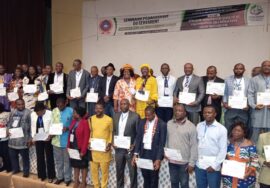
Held at the Mathias Djoumessi International Conference Center in Dschang, the conference attracted over 150 participants, including scholars and researchers from state and private institutions across Cameroon, with international participants from Kenya and Nigeria as well as other countries participating online. The strong turnout reflected the growing relevance of pragmatic studies in addressing contemporary social realities both in Africa and globally.
In his welcome address, the Chairperson of the Local Organising Committee, Prof. AFUTENDEM Lucas, described the high participation as evidence of the increasing importance of pragmatics in understanding Africa’s complex social dynamics. He noted that the conference provides a platform for scholars, researchers, and postgraduate students to explore the relationship between language, meaning, and social life. He emphasized that in African societies characterized by multilingualism, cultural diversity, and evolving socio-political contexts, pragmatics offers essential tools for analyzing communication in governance, conflict resolution, digital communication, education, identity construction and social transformation. The conference theme, he stressed, is therefore both academically significant and socially urgent.
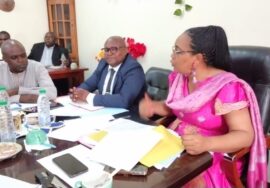
The Head of the Department of Applied Foreign Languages, Prof. AKIEUDJI Colbert, expressed pride in hosting the conference in partnership with APrA. He stated that the theme aligns closely with the department’s academic vision and mission. According to him, applied language studies engage directly with real-life communicative practices, intercultural exchanges, diplomacy, translation, and the broader social processes through which meaning is constructed.
He further observed that pragmatics lies at the intersection of language and society, making the conference a timely forum for examining how language shapes and reflects justice, power, equity, and human relations in African contexts. He added that keynote lectures, plenary sessions, and panel discussions would generate new knowledge, inspire innovative research directions, and strengthen interdisciplinary collaboration. Such discussions, he noted, could inform public policy, education, governance, and sustainable development initiatives across the continent.
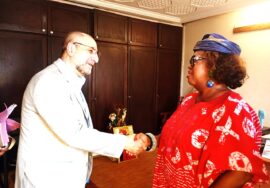
In his address, the President of APrA, Prof. Akin ODEBUNMI from Nigeria, described Cameroon as a strategic intellectual hub in the region. He remarked that hosting the conference would remain a landmark moment in the association’s history. Highlighting the interdisciplinary nature of pragmatics, he called on African scholars to engage more actively with issues of equity, balance, and morality.
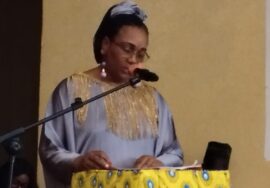
Delivering her launching address, the Dean of the Faculty of Letters and Social Sciences, Professor Rodolphine Sylvie WAMBA, representing the Rector, affirmed that the conference reflects a shared commitment to advancing scholarship that not only interprets language but also contributes to social transformation. She underscored the importance of understanding meaning within social contexts as a pathway to addressing inequality, promoting peace, and strengthening democratic participation.
Participants from several Cameroonian state universities and theological institutions engaged in discussions on topics such as pragmatic research in the digital age, political discourse and governance, social justice and inequality, digital activism, and gender and family discourse. The 4th African Pragmatics Conference ultimately reaffirmed the vital role of language studies in advancing social justice and shaping Africa’s developmental future./