
Artificial Intelligence and the Development of the University of Dschang
Four Days of Academic Exchanges on Communication Profession
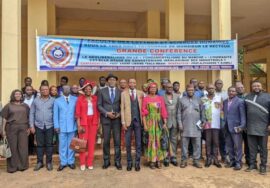
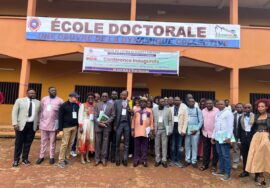
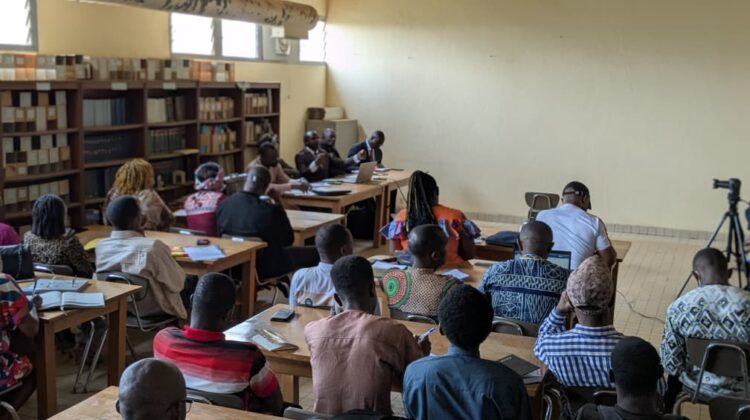
The University of Dschang is hosting a series of academic conferences on Artificial Intelligence (AI) and its impact on the development of communication professions, from February 2nd to 6th, 2026. The event is taking place in the media room of the Central Library and brings together students, lecturers, and researchers from the Faculty of Letters and Social Sciences, as well as participants from other disciplines.
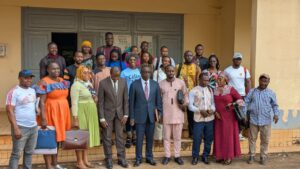 Organized within the framework of the UE93 “Conferences and Projects” course, this four-day academic initiative aims to encourage critical reflection on the major transformations currently shaping the information and communication sector in the digital era. The conferences provide a platform for dialogue and knowledge sharing on the opportunities and challenges associated with the integration of Artificial Intelligence into professional practices.
The opening conference was delivered by Professor Marcelin Nkenlifack, who addressed the theme “Artificial Intelligence in Information and Communication Professions: Technical Aspects and Practical Challenges.” In his 6-point presentation, he underscored the concepts, stakes, challenges, AI and its links to Jobs in ICT and certain projects in UDs with AI orientation. Prof Nkenlifack highlighted AI as a strategic tool capable of enhancing productivity, improving content processing, and supporting decision-making processes. He emphasized the importance of ethical use, transparency, and human oversight in the application of AI within communication professions. Professor Nkenlifack equally stressed that AI involved observation, detection, prediction and finally decision making in its execution process.
Beyond the field of communication, the conferences examined the role of Artificial Intelligence in key sectors of national development, particularly health, agriculture, and urban management. Discussions focused on AI applications in disease detection through robotics, management of medical supplies, food security, waste recovery, and the development of smart cities. These technologies contribute to improved electricity management, urban mobility, public security, and the optimized management of social housing.
Ethical communication remained a central theme throughout the exchanges. Speakers stressed the need to promote trustworthy and responsible AI, grounded in respect for fundamental rights, privacy protection, non-discrimination, and human well-being. Participants also underlined the importance of transparency in machine decision-making processes and the responsibility of communication professionals to make AI systems accessible and understandable to the public.
Several challenges related to AI adoption were identified, including the high cost of implementation, limited access to electricity and internet infrastructure, and the shortage of skilled professionals, particularly within African media organizations. Additional concerns included data reliability, personal data protection, environmental impact, and the preservation of local cultural heritage, notably languages and artistic expressions.
The conferences are moderated by lecturers, including Professor Alexandre T. Djimeli and Dr. Basile Diffouo, who facilitate discussions and ensure active engagement between speakers and participants.
Through this academic initiative, the University of Dschang reaffirms its commitment to training competent, ethical, and digitally skilled communication professionals capable of adapting to technological advancements. This series of conferences highlights Artificial Intelligence as both a challenge and an opportunity, reinforcing the University’s role in promoting innovation, responsibility, and sustainable development.